

At siliceum, we love things that are simple, efficient, and save time.
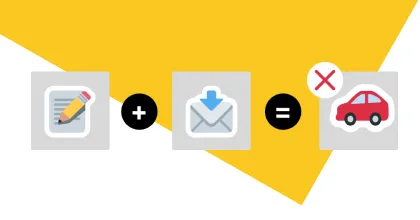
And what’s more time-consuming than travelling to collect a signature on a paper document?
We’ve all witnessed it: the race against the clock to get a quote or contract signed, the back-and-forth between offices or sites, not to mention fuel costs (or worse, the subway during rush hour).
I always feel like the White Rabbit running with his big clock when I have to get a few things signed by hand, especially when it’s far away…
What if there was a much faster and more economical solution?
Electronic signatures: a small change, but what an impact!
One click is all it takes, and you’re done. No need to travel, waste time in meetings, or queue up for a signature.
- Time savings: no more back-and-forth to collect signatures
- Reduced travel: avoid unnecessary trips
- Remote accessibility: sign wherever you are, as long as you have an internet connection
- Legal validity: a digitally sealed and signed document has real legal value, unlike a scanned handwritten signature
Less than €2 per signature. Compare that to the cost of 15 minutes of an employee’s time, plus associated travel expenses. It’s a small expense for great efficiency.
One of our clients, Sioule Sancy Incendie, enthusiastically adopted this solution. In 2024, over 1,000 signatures were made electronically, meaning that many fewer trips.
What about security?
You might be thinking: “Anyone can sign anything.” Not at all. Unlike paper signatures, where forgery is always possible, electronic signatures are secure by design.
- Data encryption: signed documents rely on cryptographic mechanisms that are difficult to forge
- Sealed documents: a signed document cannot be modified at all, any alteration invalidates the signature
- Enhanced authentication: each signatory is identified by email, SMS, or even ID verification depending on the plan
- Complete traceability: every step of the process is recorded, guaranteeing document integrity
Day-to-day efficiency
Electronic signatures are a quiet revolution: no more mountains of paper to archive, no more handwritten signatures that can take weeks to obtain.
- Dematerialization: everything is stored digitally, accessible in a few clicks
- Simplicity: teams sign directly online, without wasting time
- Automation: document tracking is optimized, reminders are automatic
A concrete example? Thanks to this technology, Sioule Sancy Incendie drastically shortened its document validation cycle.
Secretaries now have smooth document management: once documents are validated, a few clicks are all it takes to send signing invitations, then everything is archived digitally.
Technicians no longer need to travel to a client who might not even be there. They can focus on what matters most: fire safety.
Not all signature types are created equal
In France and Europe, electronic signatures are governed by the eIDAS regulation and the Civil Code. There are several levels, and not all carry the same weight in case of dispute.
Scanning your handwritten signature is not an electronic signature, and has virtually no legal value.
| Type | How it works | Security / proof | Recommended use |
|---|---|---|---|
| Scanned handwritten signature | You sign on paper, then scan or paste the image onto a PDF. | Low: anyone can copy your signature. No reliable way to prove the signatory’s identity. | Avoid for any binding document. May work for informal internal agreements. |
| Simple electronic signature | Online signature with a click + email or SMS confirmation. | Basic: proves that an email or number validated the document, but contestable. | Low-risk validations: simple quotes, purchase orders, internal approvals. |
| Advanced electronic signature | In addition to email/SMS, identity verification through ID documents or strong authentication. | Serious: document is sealed, signatory is identified. Very difficult to contest. | Client contracts, financial commitments, human resources. |
| Advanced signature with qualified certificate | Identity strictly verified (face-to-face or video), certificate issued by an audited provider. | Very high: solid level of proof, unfalsifiable document. | Sensitive documents: leases, important amendments, high-stakes supplier relationships. |
| Qualified electronic signature (QES) | Verified identity + certified device (USB key or secure app). | Maximum: same value as a signature before a notary. Reverses the burden of proof. | Public contracts, notarial acts, sensitive administrative formalities. |
Key takeaways
- A scanned signature is not an electronic signature, and has no strong legal value.
- The higher the level, the stronger the proof: ideal for avoiding any dispute.
- The Civil Code (articles 1366-1367) gives electronic documents the same legal force as paper documents, provided they guarantee the signatory’s identity and the document’s integrity.
In practice: for a quote, a simple signature is usually enough. For an employment contract or commercial lease, prefer at least an advanced signature, or an advanced signature with qualified certificate if the law requires it.
Beyond borders
Electronic signatures also break down geographical barriers. Whether you’re on the other side of the country or abroad, a document can be signed in real time.
- Remote work: signing happens in an instant, wherever you are
- International efficiency: no more time zones or postal shipments to deal with. At €2 per signature, it’s cheaper than two round-trip stamps.
- Environmental impact: less paper, less transport. A welcome bonus.
Want to try it?
Most providers offer trial plans with a limited number of signatures per month:
I used YouSign to sign quotes with the craftsmen who worked on our house this year. No subscription needed for a few signatures.
Once you want to scale up, don’t hesitate to contact us: we can negotiate on volume directly with providers.
In summary
Whether you’re a local SMB or an international company, electronic signatures are a simple, fast, secure and sustainable solution. A small investment for a great return in terms of time, cost and efficiency.
At siliceum, we like the idea that our clients can focus on what matters. And believe us, electronic signatures are anything but a detail.
Ready to say goodbye to piles of paper and the signature chase?